
The OSHA silica standard for construction, 29 CFR 1926.1153, is one of the most cited and most misunderstood rules on the average job site. If your crews cut, grind, drill, or break concrete, brick, stone, block, or mortar, they are releasing respirable crystalline silica into the air, and OSHA holds the employer responsible for keeping that exposure under a hard legal limit. Get it wrong and the price shows up twice: in citations that run into five and six figures, and in lung disease that does not surface until it is too late to reverse. This guide breaks down what the standard requires, what a violation costs in 2026, and a practical 7-step plan to bring any construction operation into compliance.
Table of Contents
- What the OSHA silica standard for construction requires
- Why respirable silica is a slow jobsite killer
- The two numbers that run the standard: 50 and 25
- Table 1: the compliance shortcut most contractors miss
- A 7-step plan to meet the OSHA silica standard for construction
- What a silica violation costs in 2026
- Where professional exposure assessments fit
- Frequently Asked Questions
What the OSHA silica standard for construction requires
At its core, the standard does three things. It sets a legal ceiling on how much respirable crystalline silica a worker can breathe over an 8-hour shift. It requires employers to use real engineering controls, not just respirators, to stay under that ceiling. And it requires a written exposure control plan, a competent person, training, and in many cases medical exams for the people most exposed.
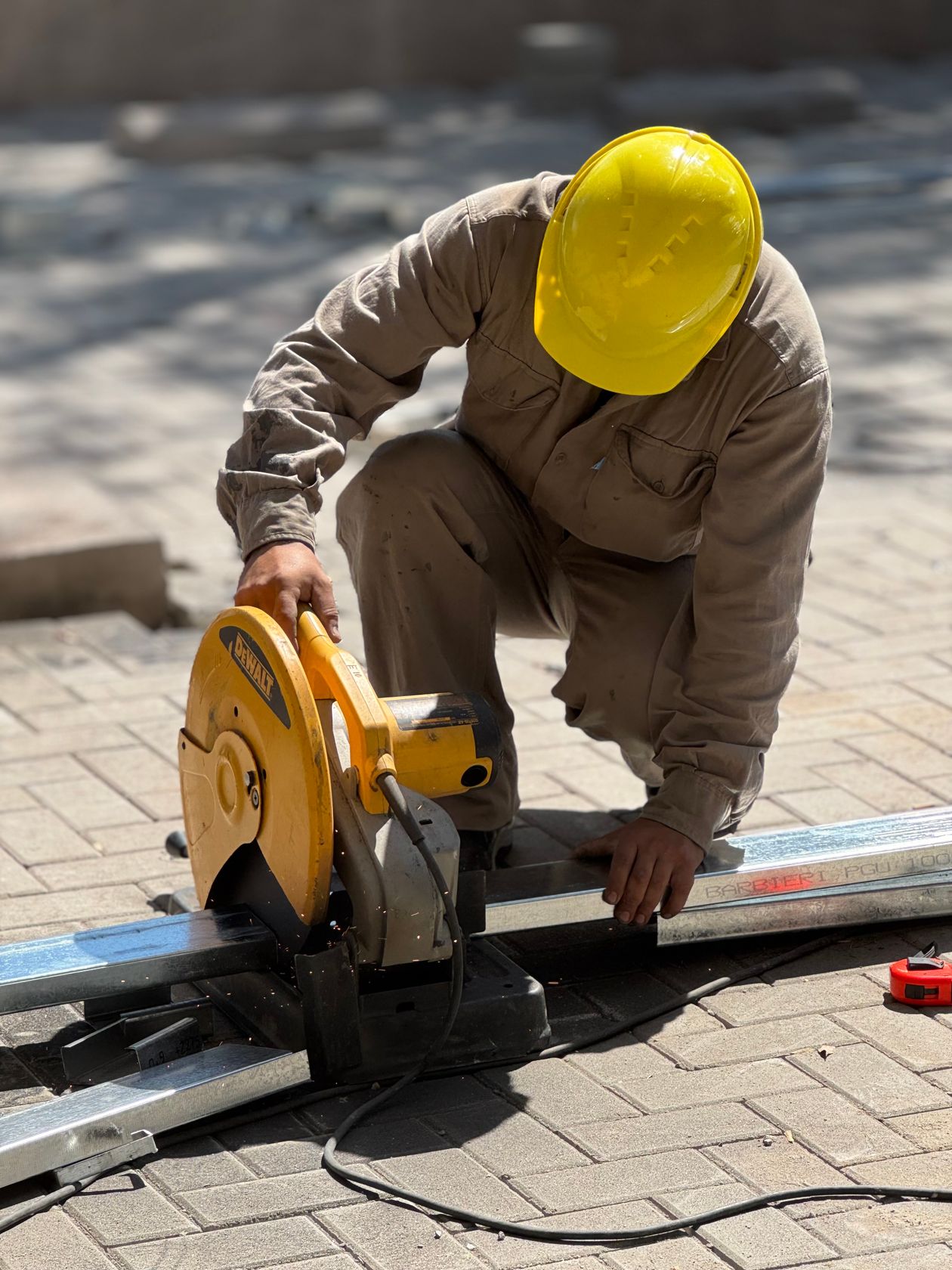
The rule reaches far more trades than most contractors assume. Concrete cutting and coring, tuckpointing, jackhammering, demolition, drilling, abrasive blasting, masonry, and even dry sweeping of silica-laden debris all fall under it. If silica dust is in the air, the standard is in play, and a clean-looking site is not the same as a compliant one. Most of the dust that matters is too fine to see.
Why respirable silica is a slow jobsite killer
Respirable crystalline silica particles are roughly 100 times smaller than ordinary sand. They travel deep into the lungs and scar the tissue permanently. The result is silicosis, an incurable and sometimes fatal disease, along with raised risk of lung cancer, COPD, and kidney disease. Nothing undoes the damage once it is done, which is exactly why OSHA regulates the exposure instead of waiting on the diagnosis.
OSHA estimates that about 2 million construction workers are exposed to respirable crystalline silica on the job. When the agency finalized the construction standard, it projected that full compliance would save more than 600 lives and prevent more than 900 new cases of silicosis every year. The CDC and NIOSH have tracked hundreds of silicosis deaths per decade, including workers still in their twenties and thirties. This is not a hazard that waits for retirement.
The timeline is what makes silica so easy to ignore. Chronic silicosis, the most common form, can take 10 to 30 years of exposure to show symptoms, so the worker breathing dust today may not cough or lose breath until long after the project closes out. Acute and accelerated forms move faster, sometimes within a few years of heavy exposure, and they hit younger workers hardest. By the time a chest X-ray confirms the scarring, the lung tissue is already gone. There is no version of this disease that improves once it starts, which is why the entire standard is built around prevention rather than treatment.
The six construction tasks that generate the most silica
Silica exposure is not evenly spread across a job site. A handful of tasks produce the overwhelming share of the dangerous dust, and they are the ones to control first.
- Sawing concrete, block, and brick. Handheld and walk-behind saws throw large volumes of fine dust unless they run a water feed or vacuum shroud.
- Grinding and tuckpointing mortar. Surface grinders and tuckpointing on masonry are among the highest-exposure tasks the standard names.
- Jackhammering and chipping concrete. Impact tools break the material and aerosolize silica at the same time.
- Drilling into concrete or rock. Rotary hammers and core drills release dust at the bit unless captured at the source.
- Abrasive blasting of concrete or stone. Blasting is one of the most severe exposures on any site and almost always needs respiratory protection on top of controls.
- Demolition and dry cleanup. Breaking out old concrete and then dry-sweeping the debris re-suspends silica that was already settled.
If your operation runs any of these tasks daily, treat them as your control priority list. Lock down the worst offenders first and you remove most of the exposure before you ever pick up a sampling pump.
The two numbers that run the standard: 50 and 25
Two figures drive everything else in the rule, and every supervisor on a silica-generating site should know them cold.
- 50 µg/m³ (the PEL). The permissible exposure limit is 50 micrograms of respirable crystalline silica per cubic meter of air, averaged over an 8-hour time-weighted average. No worker may be exposed above it.
- 25 µg/m³ (the action level). Reach 25 micrograms averaged over 8 hours and the standard triggers ongoing air monitoring and medical surveillance, even though you are still under the PEL.
Both numbers are confirmed in the regulatory text at 29 CFR 1926.1153. The gap between them matters: the action level is your early-warning line, and treating it as the real threshold keeps you well clear of a PEL violation.
Table 1: the compliance shortcut most contractors miss
The standard gives employers two roads to compliance. The first is Table 1, a built-in list of common construction tasks paired with specified dust controls, such as a water feed on a saw or a vacuum dust collection system with a HEPA filter, plus the respirator required for that task. Follow Table 1 fully and correctly and you are not required to measure worker exposure for that task at all.
The second road is to skip Table 1 and measure exposure directly through air sampling, then prove you are under the limits with your own objective data. Most contractors are best served by Table 1 for routine work and professional sampling for the tasks Table 1 does not cleanly cover. The mistake we see most often is a crew that owns the right tools but runs them dry, which voids Table 1 protection on the spot.
A 7-step plan to meet the OSHA silica standard for construction
Here is the sequence we walk construction clients through to move from exposed to compliant without guessing.
- Identify every silica task. List every activity that cuts, grinds, drills, or breaks silica-containing material. A focused workplace safety audit surfaces the tasks crews forget to mention.
- Decide Table 1 or sampling, task by task. Match each task to Table 1 where it fits, and flag the rest for air sampling.
- Run exposure assessments on the gaps. Use accredited industrial hygiene air sampling for tasks outside Table 1 or where the controls are uncertain.
- Write the exposure control plan. The standard requires a written plan describing each task, its controls, and housekeeping. It must be reviewed at least annually.
- Name a competent person. Designate someone with the knowledge and authority to inspect the controls and fix problems on the spot.
- Install and maintain the controls. Wet methods, vacuum dust collection, and ventilation come before respirators. Keep water tanks full and HEPA filters changed.
- Train, fit-test, and run medical surveillance. Train every exposed worker, fit-test respirators, and offer medical exams to anyone required to wear a respirator 30 or more days a year.
None of these steps is optional once silica is in the air, and an inspector can ask to see the written plan, the competent person, and the training records on the first visit.
Five silica mistakes that draw OSHA citations
Most silica citations are not exotic. They come from the same handful of gaps, and every one of them is preventable.
- Running Table 1 tools dry. A saw rated for wet cutting that runs without water gives you none of Table 1’s protection and full liability.
- No written exposure control plan. The plan is the first document an inspector asks for, and not having one is a standalone violation regardless of your actual dust levels.
- Skipping the competent person. The standard names this role specifically. A site with controls but no designated competent person is still out of compliance.
- Respirators with no fit test. Handing out N95s does not satisfy the standard. Tight-fitting respirators require fit testing and a medical evaluation first.
- Dry sweeping and compressed-air cleanup. The standard restricts these housekeeping methods because they re-suspend settled silica, and crews fall back into them out of habit.
Walk a site against this list and you will usually find at least one of these gaps open. Closing them is faster and far cheaper than answering for them after an inspection.
The records OSHA expects you to keep
Compliance is also a paperwork problem. The standard requires you to create and retain specific records, and missing documentation is treated as a violation even when your controls are sound.
- The written exposure control plan, reviewed and updated at least once a year.
- Air monitoring data for any task where you measured exposure instead of relying on Table 1.
- Medical surveillance records for workers required to wear a respirator 30 or more days a year, kept confidential and retained for the length of employment plus the period the standard requires.
- Training records showing each exposed worker understands the hazard, the controls, and the contents of the exposure control plan.
Pulling these together after the fact is painful. Built into your normal workflow from the start, they take minutes per job and turn an inspection into a formality.
What a silica violation costs in 2026
The financial case writes itself. As of 2026, OSHA can assess up to $16,550 per serious violation and up to $165,514 for each willful or repeat violation. Silica citations rarely arrive alone. A single inspection can pull a missing written plan, an untrained crew, and an uncontrolled task into one stack of penalties, and willful findings on a known hazard climb quickly.
Against those numbers, the cost of an exposure assessment and a written control plan is small. The contractors who get burned are almost always the ones who assumed their dust was not bad enough to matter.
How engineering controls actually keep dust down
The standard puts engineering controls ahead of respirators for a reason: controls cut the dust at the source, where it is created, instead of relying on every worker to wear and seal a respirator perfectly all shift. Three families of control do most of the work, and understanding them is what separates a crew that passes from one that just owns the gear.
- Wet methods. A steady water feed to the blade or bit knocks airborne dust down before it can be inhaled. It is the single most effective control for most cutting, grinding, and drilling tasks, and it is what Table 1 calls for on the majority of saw work.
- Vacuum dust collection. A shroud or hood at the tool captures dust at the point of creation and pulls it through a HEPA filter. It is the go-to where water would damage the work or create a slip or electrical hazard.
- Local exhaust ventilation. For enclosed or repetitive work, ventilation pulls contaminated air away from the breathing zone and exhausts or filters it.
The common thread is maintenance. A water tank that runs empty, a clogged HEPA filter, or a cracked shroud turns a compliant control into a decoration. The controls only count when they are running the way the manufacturer and Table 1 intend, which is exactly what a competent person is there to verify.
Where professional exposure assessments fit
You cannot manage what you have not measured. Professional industrial hygiene services put a number on the dust your crews actually breathe, using calibrated, OSHA-compliant sampling analyzed by accredited labs. That data tells you which tasks are fine on Table 1, which need better controls, and which workers need medical surveillance. It also gives you defensible objective data if a citation is ever challenged. Pairing sampling with a documented safety program turns a one-time check into lasting compliance.
Frequently Asked Questions
What is the OSHA silica standard for construction?
It is 29 CFR 1926.1153, the rule that limits worker exposure to respirable crystalline silica on construction sites to 50 µg/m³ over an 8-hour shift and requires engineering controls, a written plan, training, and medical surveillance. Our industrial hygiene team helps contractors meet every part of it.
What is the silica PEL and action level?
The permissible exposure limit (PEL) is 50 µg/m³ as an 8-hour time-weighted average, and the action level is 25 µg/m³. Reaching the action level triggers air monitoring and medical surveillance. A site audit confirms which of your tasks approach those lines.
Do I have to do air monitoring if I follow Table 1?
No. If you fully and correctly follow a Table 1 task and its specified controls, you are not required to measure exposure for that task. For anything outside Table 1, you need exposure assessments to prove compliance.
Who needs OSHA silica training?
Every worker who can be exposed to respirable silica at or above the action level, plus the competent person who oversees the controls. We build that into OSHA safety training tailored to your specific tasks and equipment.
How much can a silica violation cost?
In 2026, up to $16,550 per serious violation and up to $165,514 per willful or repeat violation, and citations often stack. Talk to a certified safety specialist before an inspector finds the gaps for you.
Ready to get ahead of silica compliance?
Sheffield Safety & Loss Control has helped construction and industrial employers control silica and pass OSHA scrutiny since 2003, with offices in Plainfield, Illinois and Houston, Texas. Request a quote and we will map your silica tasks, sample the ones that matter, and hand you a compliance plan you can put to work the same week.
More on OSHA compliance and jobsite safety on the Sheffield Safety blog.